When to Stop and Call
If your water heater makes a loud bang, you hear continuous hissing combined with a water puddle, or the sound is paired with a rotten-egg smell, treat it as urgent. If you smell gas at any point, leave the house immediately and call your gas utility from outside — never attempt to diagnose or manipulate a suspected gas leak yourself. For anything else on this list, call a licensed plumber.
Your water heater is not a silent appliance. Normal operation involves the burner or heating element firing, water filling, and metal expanding with heat. What's worth paying attention to are sounds that are new, getting louder, or accompanied by performance problems.
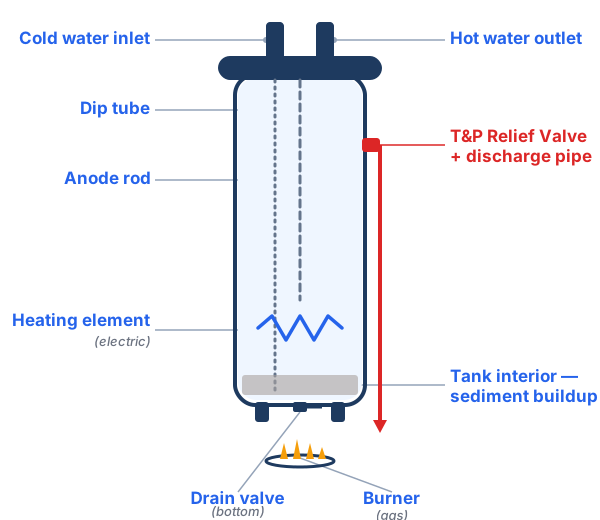
This guide breaks down every common noise by type, gives you a likely cause, and tells you when to stop investigating and call a plumber.
Quick Reference: What's That Noise?
| Sound | Likely cause | Urgency |
|---|---|---|
| Popping / crackling | Sediment buildup | Low — schedule a flush |
| Rumbling | Heavy sediment buildup | Medium — flush soon |
| Hissing (constant) | T&P valve or leak | High — inspect now |
| Knocking / banging | Water hammer, or sediment if tied to heating | Low — timing helps diagnose |
| Whistling / screeching | Restricted flow | Medium — check valves |
| Ticking | Normal thermal expansion | None |
| Sizzling (gas unit) | Condensation on burner | Low if occasional |
Popping or Crackling Noise
What it sounds like: A repeated pop, like a coffee percolator, usually when the unit is heating.
What causes it: Minerals in your water — mostly calcium and magnesium — settle at the bottom of the tank over years of use. When the heating element or burner fires, it superheats this sediment layer, and trapped water bubbles pop as they escape.
Beyond being noisy, heavy sediment can force the heater to work harder, raising your energy bills and potentially shortening the unit's life.
What to do: Flush the tank on a regular schedule, following your manufacturer's instructions, or have a plumber include it as part of routine service. If the popping is already loud, a plumber can perform a deeper flush. If the heater is over 10 years old and hasn't been flushed, the sediment layer may be severe enough that replacement is the more cost-effective call. See our full guide to a water heater making popping noise for more detail.
Prevent It
Annual flushing (draining a few gallons from the drain valve to remove settled sediment, per your manufacturer's instructions) is one of the more effective maintenance tasks for a tank water heater. Tanks that go unflushed for years are more likely to fall short of their rated 10–12 year lifespan.
Rumbling Noise
What it sounds like: A low, continuous rumble during heating cycles — like a distant washing machine.
What causes it: Similar root cause to popping, but more severe. The sediment layer can be thick enough that larger volumes of water are trapped and boiling underneath it. See our full guide to a rumbling water heater.
What to do: Have a plumber perform a professional flush and inspection. If the tank is older than 10 years, ask them to evaluate whether replacement is more cost-effective than continued flushing.
Hissing Noise
What it sounds like: A high-pitched or steady hiss, especially near the top of the unit or from a pipe leading to the floor.
Two very different causes:
The T&P relief valve is releasing pressure. This is a safety mechanism working as designed — but it means tank pressure or temperature may be too high. This is a professional job; do not attempt to adjust it yourself.
A slow water leak near a hot surface. If hissing is accompanied by moisture on the floor, stop the water supply if you can do so safely and call a plumber.
What to do: Try to trace where the hissing is coming from. If it's the T&P valve or its discharge pipe, call a licensed plumber. Our full guide to a hissing water heater covers this in more depth.
Knocking or Banging
What it sounds like: A single loud bang or knock when water flow stops — often right when a faucet or appliance shuts off. A knock that instead repeats during the heating cycle points to a different cause.
What causes it: A bang tied to a fixture shutting off is typically water hammer — a pressure shockwave in the plumbing, not the water heater itself. A knock tied specifically to the heating cycle can indicate sediment buildup instead. Timing is the key clue — see our full guide to a water heater making knocking noise for how to tell them apart.
What to do: For water hammer, a plumber can install a water hammer arrestor — a plumbing component that absorbs the pressure shockwave with an internal air chamber; cost varies by scope of work. For knocking tied to the heating cycle, treat it the same as popping and have the sediment addressed. Get a written quote before authorizing any work.
Whistling or Screeching
What it sounds like: A high-pitched whistle, often when hot water is running.
What causes it: Water being forced through a narrow gap — usually a valve that isn't fully open, or a mineral deposit narrowing a pipe connection.
What to do: Check that shutoff valves on the water heater are fully open. If the noise continues, call a plumber — a partially failing T&P valve can also cause this and may need replacement.
Ticking
What it sounds like: A light tick when the heater heats or cools.
What causes it: Normal thermal expansion and contraction of metal parts. All heaters do this.
What to do: Generally nothing — this is a normal part of how tank water heaters operate.
Sizzling (Gas Water Heaters Only)
What it sounds like: A brief sizzle when the burner ignites, typically after a cold water refill.
What causes it: Condensation on the burner chamber. Cold water entering the tank after heavy use cools the chamber slightly; when the burner fires, any moisture sizzles off.
What to do: If the sizzling is brief and occasional, right at ignition, it's normal. If it's constant, or accompanied by a sulfur smell, leave the house immediately and call your gas utility from outside — never attempt to diagnose or manipulate a suspected gas leak yourself.
Still Not Sure?
If your water heater is making a sound not listed here, or the same sound appears on multiple appliances in your home, the issue may be in your plumbing rather than the heater itself. Our quick diagnosis guide walks through the three broad root causes if you'd like a faster starting point, and a licensed plumber can diagnose noise problems across the full hot-water circuit.