Safety First
If you smell gas at any point, leave the house immediately and call your gas utility from outside. Never attempt to diagnose or manipulate a suspected gas leak yourself.
Before doing anything else, keep these points in mind:
- On electric units, cut power to the water heater at the breaker.
- On gas units, follow the shutdown procedure specified by your unit's manufacturer.
- If you smell gas at any point, leave the house immediately and call your gas utility from outside.
- Never attempt to diagnose or manipulate a suspected gas leak yourself.
Finding a puddle under your water heater is one of those moments that makes your stomach drop. The good news: not every leak means you need a full replacement. The bad news: some leaks do — and addressing a leak promptly, rather than waiting, helps limit any water damage.
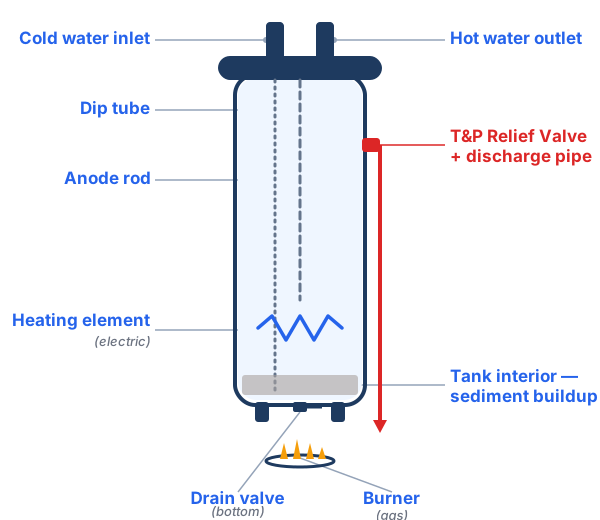
This guide walks you through the most common causes, how to safely identify the source, and exactly when you should stop troubleshooting and call a professional.
Why Acting Fast Matters
Water heater leaks tend to get worse rather than stay the same — a slow drip can, in some cases, progress into a larger leak over time if it's left unaddressed. Beyond the equipment itself, water damage to floors, drywall, and joists can add meaningfully to the overall cost, which is why it's worth investigating a leak promptly rather than waiting to see if it goes away.
Common Causes of a Bottom Leak
1. Faulty Drain Valve (Most Common — Often Fixable)
The drain valve sits at the base of the tank and is used to flush sediment during routine maintenance. Over time, the internal washer can wear down, or sediment can get lodged inside, preventing a full seal.
Signs it's the drain valve: water drips directly from the valve body or its cap.
What to do: Start with a visual inspection and confirm the valve is fully closed according to your unit's manufacturer instructions. If it continues to leak after confirming this, the valve likely needs attention beyond a simple check — this is generally a minor repair for a licensed plumber, rather than something to adjust yourself.
DIY Limit
Visually identifying where a leak is coming from is safe for any homeowner. But any physical intervention — draining the tank, disassembling a valve, or replacing a part — should follow your unit's manufacturer instructions, or be handled by a licensed plumber.
2. Temperature & Pressure (T&P) Relief Valve Discharge
The T&P relief valve is a critical safety device. It opens automatically if tank pressure or temperature gets too high, discharging water through a pipe that leads toward the floor. If this pipe is dripping, it does not necessarily mean the valve is faulty — it may mean your tank pressure or temperature is genuinely too high.
Do not plug, cap, or remove the T&P discharge pipe. This valve is a critical safety device designed to relieve unsafe temperature or pressure inside the tank.
What to do: If you see water coming from the T&P discharge pipe, call a licensed plumber. The underlying cause — excessive pressure, a failing expansion tank, or a faulty thermostat — requires professional diagnosis. Our guide to a leaking or hissing T&P valve covers this in more detail.
3. Internal Tank Corrosion (Requires Replacement)
If you've ruled out the drain valve and the T&P discharge pipe, and water is seeping from the bottom of the tank itself, the internal tank has likely failed due to corrosion or age-related wear. This is not repairable.
Signs: rust-colored water pooling under the tank, visible mineral crust on the tank exterior, heater is 10+ years old.
What to do: Call a licensed plumber to confirm the diagnosis. At this point, replacement is typically the only realistic option, representing a full replacement cost that varies by location and unit type. See our guide to help decide whether to repair or replace your water heater for a full breakdown of that decision.
4. Condensation (Not a Leak — Usually Normal)
In cold weather, or when the tank refills with very cold water after heavy use, condensation can form on the outside of the tank and drip to the floor. This can look exactly like a leak.
How to tell: Dry the area completely and wait a couple of hours. If moisture only returns when hot water is used and the surrounding area is cold, it's likely condensation. If the moisture persists, keeps returning regardless of hot water use, or you simply can't tell the difference from a genuine leak, treat it as a potential leak rather than assuming it's harmless — it's worth having a plumber take a look.
How To Identify the Source (Safe Checklist)
| Step | What to do |
|---|---|
| 1 | Dry the area completely |
| 2 | Visually inspect the connections at the top of the heater |
| 3 | Visually inspect the T&P valve discharge pipe |
| 4 | Visually inspect the drain valve at the base of the tank |
| 5 | Visually inspect the tank exterior for rust or cracks |
| 6 | Wait 1–2 hours and observe where moisture reappears |
| 7 | Stop immediately if you smell gas, notice anything related to electrical components, see the T&P valve actively discharging under pressure, or feel unsure at any point |
When To Call a Professional Immediately
- You smell gas at any point.
- The T&P discharge pipe is dripping continuously.
- Water is flowing, not dripping.
- The tank is 10+ years old and shows rust.
- You cannot locate the source.
- You are uncomfortable with any step above.
Tip: Document Before You Call
Take a short video showing exactly where the water appears. This helps the plumber quote accurately over the phone and speeds up the diagnosis when they arrive.
What a Plumber Will Likely Do
A licensed plumber will isolate the source, confirm whether the issue is the drain valve, T&P valve, a connection, or the internal tank, and provide a quote before proceeding. Repair timelines and costs vary significantly depending on the scope of work, your location, and the specific plumber — a drain valve issue is typically a minor repair, while a full tank replacement is a larger undertaking.
Ask for a written quote before authorizing any work.