Safety First
If you smell gas at any point, leave the house immediately and call your gas utility from outside. Never attempt to diagnose or manipulate a suspected gas leak yourself.
Before diagnosing anything else, keep these points in mind:
- On electric units, cut power at the breaker if you need to stop the unit for any reason — never open the electrical access panel yourself.
- On gas units, follow the shutdown procedure specified by your unit's manufacturer.
- If you smell gas at any point, leave the house immediately and call your gas utility from outside.
- Never attempt to diagnose or manipulate a suspected gas leak yourself.
A water heater not hot enough for your household's normal routine is one of the most common complaints homeowners run into, and in many cases the cause is something a plumber (or you, with a bit of diagnosis) can narrow down fairly quickly. This guide walks through the causes worth checking in order, and points you to the right next guide depending on what you find.
Start With the Basics
Before assuming a major fault, rule out the simplest explanations first:
- Is the thermostat set lower than you expect? A setting that's been bumped down — by another household member, during a move, or after a repair — is an easy explanation that's often overlooked.
- Has hot water demand increased? A new household member, a second shower running back-to-back, or a new appliance can push a tank past what it was ever sized to handle, without anything being "broken."
- Is this new, or has it always been this way? A tank that used to keep up but recently stopped is a different problem than one that's never quite kept up.
Common Causes, Roughly in the Order Worth Checking
- Thermostat setting. Confirm it's set to your unit's manufacturer-recommended level, typically around 120°F, and hasn't drifted or been changed.
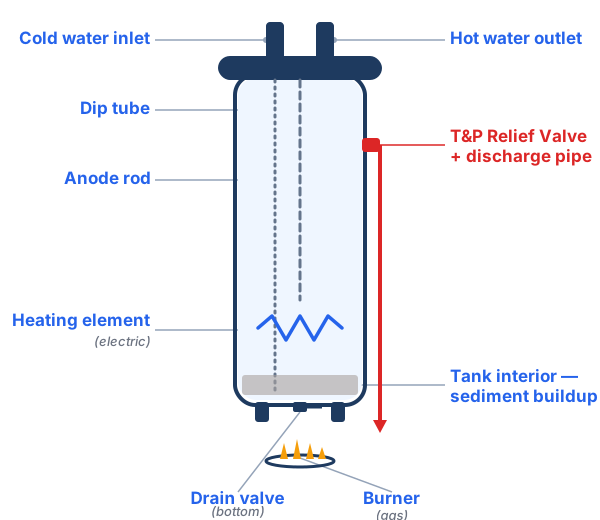
- Sediment buildup. Mineral sediment settling at the bottom of the tank can insulate the water from the heat source, which can reduce how effectively the unit heats. This tends to develop gradually on tanks that haven't been flushed in a while.
- Undersized tank for current demand. If your household's hot water use has grown, a tank that was previously adequate may simply be undersized now.
- Aging or failing heating element (electric) or burner (gas). Components wear out over time and can lose efficiency before failing completely — see our dedicated guides for electric and gas units for causes specific to your fuel type.
- Crossed hot and cold lines, or a faulty mixing valve. Less common, but can produce lukewarm water even when the tank itself is heating correctly.
Is It Gas or Electric? That Changes the Likely Cause
The two fuel types fail in different ways, so once you've ruled out the basics above, it's worth moving to the guide for your specific unit: our gas water heater not heating guide covers pilot lights, thermocouples, and gas supply issues, while our electric water heater not heating guide covers breakers, safety switches, and heating elements.
When It's a Pilot Light Issue
If you have a gas unit and the pilot light is out or won't stay lit, that's a distinct enough problem to warrant its own diagnosis — see our guide to a water heater pilot light that won't stay lit.
What a Plumber Checks First
Before opening anything up, a plumber or technician typically starts with the same basics covered above — thermostat setting, recent changes in household demand, and how long the problem has been happening — because those questions rule out the easiest explanations without any tools. From there, they'll generally ask whether the water is lukewarm or completely cold, and whether it affects the whole house or a single fixture, since those patterns point toward different likely causes. Our guide to what the pattern tells you walks through that distinction in more detail if you'd like to narrow things down yourself first.
Why This Is Worth Addressing Sooner Rather Than Later
A tank that's struggling to keep up with demand tends to keep struggling, and in some cases can get worse rather than stay the same — a partially failing component rarely improves on its own. Beyond the inconvenience, a heater working harder than it should to reach temperature can mean higher energy bills in the meantime. None of this usually calls for emergency action, but it's a reasonable reason to investigate within a reasonable timeframe rather than adjusting your routine around it indefinitely.
When To Call a Professional
- You've confirmed the thermostat setting and it's not the issue.
- The problem developed suddenly rather than gradually.
- You smell gas, hear unusual noises, or notice a leak alongside the heating problem.
- You're not comfortable diagnosing further yourself.
Bottom Line
A water heater not hot enough for your household usually traces back to one of a handful of common causes — a thermostat setting, sediment, rising demand, or an aging component. Working through them in order, and moving to the guide specific to your fuel type when needed, will get you to an answer faster than guessing.